Cleaning a meth-contaminated property is only part of the process. Meth clearance testing is the important next step that helps confirm whether the decontamination work has achieved the required result.
A property can look clean after professional cleaning, but appearance alone does not prove that meth residue has been removed. Proper post-decontamination testing checks the affected areas and determines whether residue levels are still above the applicable limit.
For rental properties in New Zealand, the 2026 regulations require post-decontamination detailed testing by a qualified professional. The person carrying out this testing must be different from the person who completed the decontamination work.
If you have recently completed meth decontamination, this guide explains what happens next, what meth clearance testing involves and what happens if the property does not pass the follow-up test.
What Is Meth Clearance Testing?
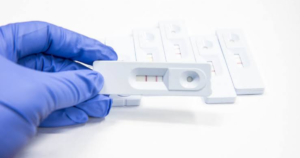
Meth clearance testing is the detailed testing carried out after meth decontamination to check whether methamphetamine residue has been reduced to the required level.
The purpose is simple:
Clean → Test → Review results → Remediate again if needed
For rental properties, the current maximum acceptable meth residue level is 15 µg/100 cm². If testing shows levels are still above this amount, additional decontamination and detailed testing are required.
This means clearance testing is not simply another quick swab.
It is a formal part of the post-decontamination process for properties covered by the current rental-property regulations.
Why Is Meth Clearance Testing Important?
Meth clearance testing provides evidence about the condition of the property after cleaning.
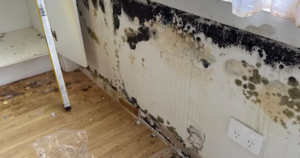
Meth residue can be difficult to see. Walls, floors and other surfaces may look completely clean while laboratory testing can still identify residue.
That is why simply saying “the house has been cleaned” is not enough.
Proper post-decontamination testing can help establish whether:
- The affected areas have been adequately treated
- Meth residue remains above the applicable level
- More cleaning is required
- The property has reached the required testing outcome
- There is documentation of the post-remediation condition
Tenancy Services specifically states that after decontamination, detailed testing must be carried out again by a qualified professional.
7 Essential Steps After Decontamination
Once cleaning is complete, the next stage should follow a structured process.
1. Finish the Decontamination Work
Before meth clearance testing takes place, the planned decontamination work needs to be completed.
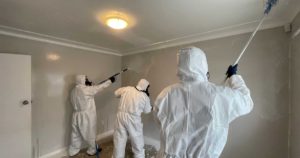
This may include cleaning affected hard surfaces, treating suitable soft furnishings and dealing with materials that cannot be effectively decontaminated.
For rental properties, Tenancy Services states that contaminated areas above 15 µg/100 cm² must be decontaminated until residue levels are at or below that level.
The cleaning process should be based on the actual contamination findings rather than simply cleaning the entire property without an assessment.
For more information, see our guide to professional meth house decontamination services.
2. Allow the Property to Be Properly Prepared for Testing
After cleaning, the property needs to be ready for the testing process.
The testing professional should have access to the areas that were previously identified as contaminated or that require post-decontamination verification.
Good preparation helps avoid unnecessary delays and makes it easier to compare the post-cleaning results with the original contamination findings.
Property owners should also keep the original test report available.
This gives the testing professional useful information about:
- Previous sample locations
- Original contamination levels
- Affected rooms
- Materials that were treated
- Areas requiring follow-up testing
3. Arrange Qualified Post-Decontamination Testing
This is the key stage of meth clearance testing.
For rental properties, Tenancy Services states that post-decontamination detailed testing must be completed by a qualified professional. The tester must not be the same person who carried out the decontamination work.
This separation is important because the person verifying the result should be independent from the person who completed the cleaning.
The testing process should follow the applicable requirements of NZS 8510:2017, as modified by the Residential Tenancies (Managing Methamphetamine Contamination) Regulations 2026.
What Does Meth Clearance Testing Check?
Meth clearance testing checks whether meth residue remains in the tested areas after cleaning.
The tester may take samples from relevant surfaces based on the property’s contamination history and the testing requirements.
The results can then be compared with the applicable maximum acceptable level.
For rental properties, the current maximum acceptable level is:
15 µg/100 cm²
If results are at or below this level, the affected area meets the current maximum acceptable residue level for the rental-property regulations.
If results remain above 15 µg/100 cm², further decontamination and detailed testing are required.
4. The Samples Are Analysed
After samples are collected, they are analysed using the appropriate testing process.
The purpose is to determine how much methamphetamine residue remains on the tested surfaces.
This is where meth clearance testing becomes more than a visual inspection.
A property owner might look at freshly cleaned walls and think everything is fine. However, testing provides measurable evidence rather than relying on appearance.
The results should be reviewed alongside the original contamination report and the decontamination work completed.
5. Review the Meth Clearance Testing Results
Once the results are available, they need to be interpreted correctly.
There are generally two important outcomes for a rental property.
Results Are 15 µg/100 cm² or Less
If the relevant results are at or below the current maximum acceptable level, the post-decontamination testing has confirmed that the tested areas are no longer above the applicable contamination threshold.
Results Are Above 15 µg/100 cm²
If results remain above 15 µg/100 cm², the property has not achieved the required decontamination outcome for the affected area.
Further decontamination is required, followed by another round of detailed testing.
This is why meth clearance testing should not be treated as a box-ticking exercise.
The results determine what happens next.
6. Complete More Decontamination If Required
Sometimes the first cleaning process does not remove enough residue.
This can happen because meth residue may be present on different materials or in areas that are more difficult to clean.
If post-decontamination meth clearance testing identifies levels above the applicable limit, further remediation may be required.
The process then becomes:
Additional cleaning → further testing → review results
Tenancy Services confirms that if meth residue remains above 15 µg/100 cm², additional rounds of decontamination and detailed testing must take place for affected rental properties.
This does not necessarily mean the entire property needs to be cleaned again.
The response should be based on the actual test results and affected areas.
7. Keep Your Meth Clearance Testing Records
The final step is often overlooked.
Once meth clearance testing is complete, keep the relevant documentation with the property’s records.
Useful documents can include:
- Original screening report
- Detailed contamination report
- Laboratory results
- Decontamination scope
- Cleaning invoices
- Before-and-after photographs
- Post-decontamination testing results
- Any additional remediation records
- Insurance correspondence
- Relevant tenancy documentation
Keeping these records creates a clear history of what happened at the property.
This can become particularly useful if the property is later sold, refinanced, rented or inspected.
What Happens If a Property Fails Meth Clearance Testing?
A failed post-decontamination result does not mean the entire remediation process has failed.
It means the testing has identified remaining meth residue above the applicable level.
The next step is to understand:
- Which area failed
- What level was detected
- Which surface was tested
- What cleaning was previously completed
- Whether additional treatment is appropriate
- Whether another material needs to be removed or treated
Further decontamination can then be carried out before another round of meth clearance testing.
For rental properties, this process continues until the affected areas meet the applicable maximum acceptable level.
Does Every Room Need Meth Clearance Testing?
Not necessarily.
The testing approach depends on the property’s contamination history, previous testing and the requirements applying to the property.
For rental properties, contamination is determined on a room-by-room basis. For example, Tenancy Services explains that if one bedroom is above 15 µg/100 cm² while another room is below the level, the affected bedroom may require decontamination while the unaffected room does not.
This is why property owners should avoid assuming that every room requires identical treatment.
A professional testing plan should identify the areas that require appropriate follow-up testing.
What Is the Difference Between Meth Testing and Meth Clearance Testing?
The terms can sound similar, but they describe different stages of the process.
Initial Meth Testing
Initial testing is used to determine whether meth residue is present and whether more detailed testing is required.
Detailed Meth Testing
Detailed testing identifies the level and location of contamination and helps determine whether decontamination is required.
Meth Clearance Testing
Meth clearance testing is the post-decontamination testing used to check whether the cleaning process has achieved the required result.
The basic process is:
Initial testing → Detailed assessment → Decontamination → Meth clearance testing
For rental properties, these stages must follow the current regulatory requirements and applicable NZS 8510:2017 provisions.
Why a Visual Inspection Is Not Enough
A property can look spotless after cleaning and still require verification.
Methamphetamine residue is not necessarily visible to the naked eye.
A visual inspection can tell you whether a surface looks clean.
It cannot by itself confirm the amount of meth residue remaining.
That is why post-decontamination meth clearance testing is so important when verification is required.
Our guide on how meth contamination testing protects your home, family and investment explains why testing is an important part of managing contamination.
Meth Clearance Testing and the 15 µg Level
The 15 µg/100 cm² level is particularly important for rental properties under the current 2026 regulations.
Tenancy Services states that areas with meth residue above 15 µg/100 cm² are contaminated and must be decontaminated until the residue is at or below 15 µg/100 cm².
There is also a 30 µg/100 cm² level relating to whether a rental property is considered uninhabitable under the regulations, subject to the circumstances specified in the legislation.
These two numbers should not be confused.
The 15 µg level is the maximum acceptable meth residue level used for contamination and decontamination requirements.
The 30 µg level relates to the maximum inhabitable level under the rental-property rules.
Do You Need a Clearance Certificate?
This is an important change to understand under the current 2026 rental-property requirements.
Tenancy Services states that the clearance report and clearance certificate described in section 5.6 of NZS 8510:2017 are not required under the modified requirements.
However, post-decontamination detailed testing is still required for rental properties to confirm that meth residue is no longer above the applicable maximum acceptable level.
So, do not assume that a document called a “clearance certificate” is automatically required simply because the property has been decontaminated.
What matters is completing the required testing and retaining the relevant evidence.
Who Should Carry Out Meth Clearance Testing?
For rental properties, post-decontamination detailed testing must be completed by a qualified professional.
Importantly, the tester must be separate from the person who carried out the decontamination work.
This helps provide an independent verification of the cleaning outcome.
If you are choosing a testing provider, ask:
- Are you qualified to carry out detailed testing?
- Will the testing follow the current NZ requirements?
- Are you independent from the decontamination contractor?
- What areas will be tested?
- How will the results be reported?
- What happens if the results remain above 15 µg/100 cm²?
Clear answers to these questions can help you understand what you are paying for.
Meth Clearance Testing After a Rental Property Is Cleaned
Landlords should not assume that a property is ready for a new tenancy simply because the cleaning work is finished.
If the property was contaminated above the applicable level, the required decontamination process needs to be completed.
Post-decontamination meth clearance testing then confirms whether the affected areas meet the required level.
Tenancy Services states that landlords must decontaminate affected areas and that post-decontamination detailed testing must be completed to confirm the residue is no longer above 15 µg/100 cm².
This creates a straightforward process:
Test → Decontaminate → Test again → Review → Complete further work if required
What Property Owners Should Do After Meth Clearance Testing
Once the final testing results are available, property owners should review and store the documentation.
If the results meet the applicable requirements, keep the reports with the property’s records.
If the results remain above the applicable level, discuss the next remediation steps with the relevant professionals.
Do not simply ignore an unsuccessful result.
The purpose of meth clearance testing is to identify whether further action is needed.
Does Meth Clearance Testing Matter When Selling a Property?
It can be useful to keep complete testing and remediation records when preparing a property for sale.
The Real Estate Authority updated its methamphetamine disclosure guidance for licensed real estate professionals on 7 September 2026. The updated guidance covers disclosure considerations, testing and decontamination methods and other issues involving methamphetamine-contaminated properties.
If your property has a history of meth contamination, speak with your real estate professional about the relevant disclosure requirements and provide the available testing and remediation documentation.
Do not assume that completing cleaning automatically removes every disclosure consideration.
The circumstances and available evidence matter.
Common Meth Clearance Testing Mistakes
Property owners can make several mistakes after decontamination.
Mistake 1: Assuming Clean Means Clear
A property can look clean without having been verified through appropriate testing.
Mistake 2: Using the Same Person for Cleaning and Testing
For rental properties, the person completing post-decontamination detailed testing must be separate from the person who performed the decontamination.
Mistake 3: Ignoring a Failed Result
If testing remains above the applicable level, additional decontamination and testing are required for affected rental-property areas.
Mistake 4: Losing the Original Report
The original contamination results provide important context for the remediation and post-cleaning testing.
Mistake 5: Treating Clearance Testing as a Standard House Clean
Meth contamination requires a specific testing and remediation process. Normal household cleaning does not replace appropriate verification.
Meth Clearance Testing Checklist
Use this checklist after meth decontamination.
Before Testing
- Complete the planned decontamination.
- Keep the original contamination report.
- Record the areas that were treated.
- Keep cleaning and remediation records.
- Arrange qualified post-decontamination testing.
During Testing
- Confirm the tester is appropriately qualified.
- Ensure the tester is separate from the decontamination contractor.
- Test the relevant affected areas.
- Follow the applicable NZ testing requirements.
After Testing
- Review the results.
- Check whether results are at or below 15 µg/100 cm² where the rental-property requirements apply.
- Arrange further decontamination if required.
- Repeat detailed testing if additional remediation is needed.
- Keep the final testing records.
How Kiwi Meth Xpert Can Help
Professional meth decontamination should not end when the cleaning crew leaves the property.
The next stage is verification.
Kiwi Meth Xpert provides professional meth contamination and decontamination services and can help property owners understand the process from assessment through remediation.
Our meth house decontamination service focuses on properties affected by methamphetamine contamination.
You can also read our guide about signs your property may need professional meth decontamination for more information about the remediation process.
For testing information, see our guide to meth contamination testing.
Final Thoughts on Meth Clearance Testing
Meth clearance testing is an important part of the post-decontamination process.
Cleaning removes or reduces contamination, but testing provides measurable evidence about the result.
For rental properties under New Zealand’s 2026 regulations, post-decontamination detailed testing must be completed by a qualified professional, and the tester must be separate from the person who performed the decontamination. If residue remains above 15 µg/100 cm², further decontamination and testing are required.
The key process is simple:
Assess → Test → Decontaminate → Meth clearance testing → Review results → Remediate again if required.
If your property has recently undergone meth decontamination, keeping accurate testing and remediation records can help you demonstrate what work was completed and what the follow-up testing showed.
Need Meth Clearance Testing After Cleaning?
If your property has been professionally decontaminated and you need to understand the next testing stage, Kiwi Meth Xpert can help explain the process.
Contact Kiwi Meth Xpert to discuss meth contamination testing and decontamination requirements for your property.
Phone: 020 4444 044
Email: info@kiwimethxpert.co.nz