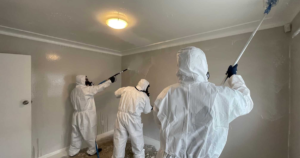
Finding meth residue in a home can be worrying, especially when the contamination involves furniture, carpets, curtains, mattresses or other soft furnishings. Many property owners immediately ask the same question: can meth contaminated furniture cleaning save these items, or do they need to be removed?
The answer depends on the level of contamination, the type of material, how the item was affected and whether it can be properly cleaned and verified.
In New Zealand, methamphetamine contamination is managed under the Residential Tenancies (Managing Methamphetamine Contamination) Regulations 2026 , The current maximum acceptable level for methamphetamine in premises is 15 µg/100 cm².
That means ordinary household cleaning is not always enough. A professional assessment can help determine which soft furnishings can be cleaned and which items should be removed.
If you are dealing with a suspected contaminated property, Kiwi Meth Xpert’s meth contamination services can help you understand the next steps.
What Is Meth Contaminated Furniture Cleaning?
Meth contaminated furniture cleaning is the process of assessing and treating furniture that may have methamphetamine residue on or within its surfaces.
Meth residue can settle on many parts of a home. It may be found on:
- Sofas and couches
- Fabric chairs
- Curtains
- Carpets
- Mattresses
- Cushions
- Bed bases
- Rugs
- Fabric-covered furniture
- Other porous furnishings
The important point is that meth residue is not always visible. A sofa can look clean while still requiring assessment.
This is why meth contaminated furniture cleaning should not be treated like normal upholstery cleaning. Regular vacuuming, shampooing or wiping may improve the appearance of an item without proving that contamination has been removed.
For more information about identifying possible contamination, see our guide on How Meth Contamination Testing Protects Your Home, Family, and Investment.
Can Meth Contaminated Furniture Be Cleaned?
In some cases, yes.
However, meth contaminated furniture cleaning is not suitable for every item. The decision depends on the material, construction, contamination level and whether the item can be cleaned effectively.
New Zealand’s current tenancy guidance says that carpets, curtains and other soft furnishings provided by a landlord can remain in the property when they are capable of being decontaminated. In that situation, they must be HEPA-filter vacuumed and then steam cleaned. If they cannot be cleaned to the required level, they must be removed and replaced.
This is an important distinction.
Cleaning a contaminated item is not the same as simply making it look clean.
The goal is to reduce meth residue to an acceptable level and then use appropriate post-decontamination testing to confirm the result.
Meth Contaminated Furniture Cleaning Depends on the Material
Different materials react differently to contamination and cleaning.
Fabric Sofas and Chairs
Fabric furniture can be difficult because meth residue may settle into fibres, seams, cushions and other areas that are not easy to reach.
Professional meth cleaning upholstery may be possible when the construction and material allow effective cleaning.
The item should be assessed before deciding whether to keep it.
Wooden Furniture
Sealed, non-porous surfaces may be easier to clean than heavily porous materials. However, the entire item still needs to be assessed rather than assuming that a simple wipe will solve the problem.
Drawers, handles, joints and unfinished areas may require additional attention.
Fabric Cushions
Loose cushions can hold residue within their covers and filling. Cleaning the cover alone may not address contamination elsewhere in the cushion.
For this reason, meth decontamination furniture decisions should consider the complete construction of the item.
Mattresses
Mattresses deserve particular attention.
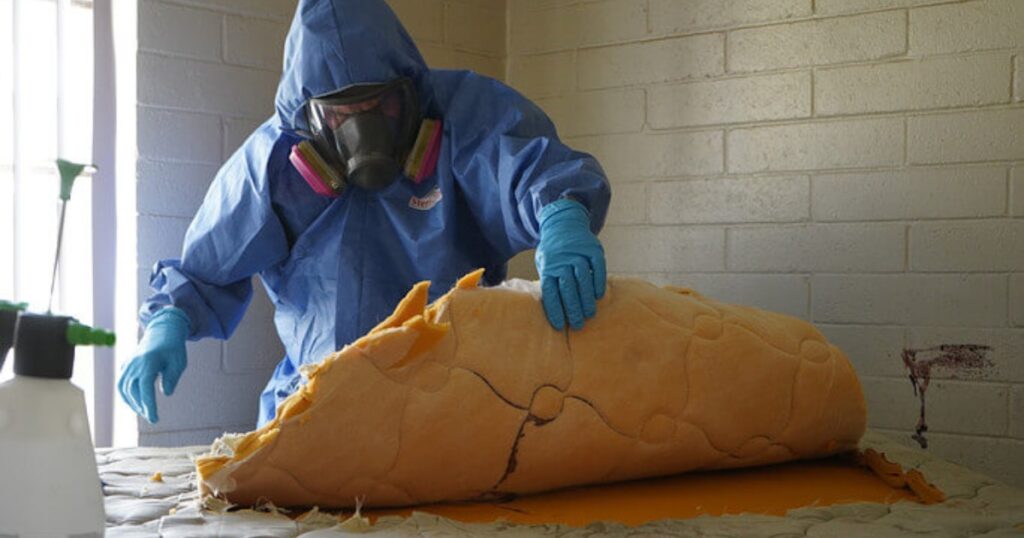
A mattress contains layers of porous materials, including fabric, foam and filling. Because of this construction, meth contaminated mattresses may not always be suitable for cleaning and retention.
New Zealand Tenancy Services specifically identifies couches and mattresses among soft furnishings that may need to be removed when they cannot be cleaned.
A professional assessment should determine whether a mattress can realistically be decontaminated or whether replacement is the better option.
Meth Cleaning Upholstery: What Should You Know?
Meth cleaning upholstery requires more care than ordinary upholstery cleaning.
A standard upholstery cleaner generally focuses on dirt, stains, dust and odours. Meth remediation has a different objective: dealing with chemical residue and confirming that the affected item or area has been adequately treated.
Before starting meth contaminated furniture cleaning, consider:
- Has the property or furniture been tested?
- Which items are actually affected?
- What type of material does each item contain?
- Can the material be cleaned without damaging it?
- Can the item be properly assessed after cleaning?
- Does the item need to remain in the property?
These questions help prevent unnecessary disposal while also avoiding the mistake of keeping an item that cannot be adequately decontaminated.
What About Meth Contaminated Carpet?
Carpet is one of the most common soft furnishings that property owners worry about.
A meth contaminated carpet can hold residue within its fibres and backing. Simply vacuuming with a standard household vacuum does not provide the same approach required for meth decontamination.
Under the current New Zealand regulations, contaminated carpets provided by a landlord as part of the tenancy can remain when they are capable of being decontaminated. They must be HEPA-filter vacuumed and then steam cleaned. If they cannot be brought below the required level, they must be removed.
This makes professional assessment particularly useful when deciding whether carpet replacement is necessary.
Meth Residue in Curtains: Can Curtains Be Saved?
Curtains are another common concern.
Meth residue in curtains can be difficult to identify because curtains may look completely normal even when residue is present.
Current New Zealand guidance includes curtains among the soft furnishings that may be cleaned when they are capable of being decontaminated and are to remain in a rental property. The required process includes HEPA-filter vacuuming followed by steam cleaning.
However, not every curtain can necessarily be retained.
The fabric, lining, construction and contamination level all matter. If cleaning cannot achieve the required result, replacement may be necessary.
Cleaning Soft Furnishings After Meth Contamination: Why DIY Cleaning Can Be Risky
It is understandable that property owners want to save money by cleaning affected furniture themselves.
The problem is that ordinary household cleaning does not necessarily address meth contamination properly.
DIY cleaning can also create other problems:
- You may spread residue to clean areas.
- You may damage furniture without removing contamination.
- You may rely on odour as an indicator of cleanliness.
- You may not know which materials can be safely retained.
- You may not have appropriate equipment.
- You may not have independent post-cleaning verification.
The purpose of cleaning soft furnishings after meth contamination should not simply be to remove stains or smells. The process should follow an appropriate decontamination plan based on the contamination findings.
Our guide on DIY vs. Professional Meth Cleaning explains why meth contamination requires a different approach from ordinary household cleaning.
Meth Decontamination Furniture: When Should an Item Be Removed?
Not every contaminated item needs to go straight to the rubbish.
At the same time, keeping every item is not always the right choice.
Meth decontamination furniture decisions should consider whether the item can actually be cleaned and retained.
Removal may be appropriate when:
- The material is highly porous.
- The item has multiple layers that are difficult to access.
- Contamination has penetrated deep into the material.
- The item cannot be effectively cleaned.
- Cleaning could damage the item.
- Post-cleaning testing does not confirm an acceptable result.
- The cost of remediation is greater than replacement.
This is particularly relevant for some mattresses, heavily upholstered couches and other items containing foam or inaccessible internal materials.
The aim should be to make a practical decision based on evidence rather than automatically throwing everything away.
Meth Remediation Upholstery Should Be Part of a Wider Plan
Furniture rarely exists in isolation.
If a sofa is contaminated, other areas of the room may also require assessment. Residue can be present on floors, walls, hard surfaces and other furnishings.
That is why meth remediation upholstery should form part of an overall property remediation plan when contamination is confirmed.
A typical process may include:
1. Assess the Property
Start by understanding where contamination may exist and which items may have been affected.
2. Test Where Required
Testing helps identify contamination and determine the areas that require attention.
3. Separate Items
Items that can potentially be cleaned should be separated from items that cannot be effectively remediated.
4. Clean Suitable Soft Furnishings
Appropriate cleaning methods should be used for carpets, curtains and other furnishings that are capable of being retained.
5. Remove Items That Cannot Be Decontaminated
Some porous furnishings may need to be removed and replaced.
6. Complete Post-Decontamination Testing
The current New Zealand process requires post-decontamination testing to confirm that the premises are no longer contaminated. If levels remain above the acceptable limit, additional decontamination and testing may be needed.
What Does New Zealand Law Say About Meth Contamination?
New Zealand’s rules changed in 2026.
The Residential Tenancies (Managing Methamphetamine Contamination) Regulations 2026 came into force on 16 April 2026. They set the maximum acceptable methamphetamine level for premises at 15 µg/100 cm².
For rental properties, Tenancy Services states that landlords must decontaminate areas where meth residue is above the prescribed limit.
The regulations also provide specific requirements for carpets and soft furnishings supplied by the landlord. Where those items can be cleaned and retained, they must be HEPA-filter vacuumed and steam cleaned. Items that cannot be adequately cleaned may need to be removed and replaced.
You can read the current official guidance from New Zealand Tenancy Services and the full legislation through New Zealand Legislation.
Always check the current regulations and obtain professional advice for your specific situation, particularly where a rental property is involved.
Does Meth Contamination Mean You Have to Throw Away All Your Furniture?
No.
This is one of the biggest misconceptions about meth contamination.
Meth contaminated furniture cleaning can be appropriate for some items, depending on their condition and construction. The right approach is to assess each item rather than automatically replacing everything.
Some furniture may be suitable for cleaning. Other furniture may not be.
For example, a removable washable curtain may have a very different remediation pathway from a heavily contaminated mattress with deep foam layers.
The same principle applies to carpets, couches, chairs and cushions.
The goal is simple: retain what can be properly decontaminated and remove what cannot.
How Kiwi Meth Xpert Can Help With Meth Contaminated Furniture Cleaning
At Kiwi Meth Xpert, we understand that meth contamination can create difficult decisions for homeowners, landlords, tenants and property managers.
Our approach focuses on identifying affected areas, selecting an appropriate remediation method and helping property owners understand which items may be suitable for cleaning.
We provide meth contamination services across New Zealand and also offer meth testing solutions.
You can learn more about our overall approach through Kiwi Meth Xpert’s meth cleaning services.
For property owners who want to understand the difference between residential and commercial remediation, our guide to Residential vs Commercial Meth Cleaning may also be useful.
Frequently Asked Questions About Meth Contaminated Furniture Cleaning
Can meth contaminated furniture be cleaned?
Sometimes. It depends on the furniture material, construction, contamination level and whether it can be adequately decontaminated. Some porous items may need to be removed rather than cleaned.
Can meth contaminated mattresses be cleaned?
Not always. Mattresses contain porous materials and internal layers that can make effective decontamination difficult. An assessment should determine whether the mattress can be retained or should be replaced.
Can meth contaminated carpet be cleaned?
Some carpets can be cleaned. Under current New Zealand rental-property requirements, carpets that are capable of being decontaminated and are to remain must be HEPA-filter vacuumed and steam cleaned.
Can curtains with meth residue be cleaned?
Potentially. Curtains are specifically included in the current guidance for soft furnishings. If they can be decontaminated and retained, they must be HEPA-filter vacuumed and steam cleaned in the relevant rental-property situation.
Is normal upholstery cleaning enough?
No. Normal upholstery cleaning focuses mainly on dirt, stains and appearance. Meth remediation requires an approach designed to address contamination and, where required, verify the result.
Should I throw away all my furniture after meth contamination?
No. Some items may be suitable for professional cleaning. Others may need replacement. Making the decision item by item can prevent unnecessary costs while helping ensure contaminated materials are not retained when they cannot be properly decontaminated.
Should I test before cleaning?
Testing can help identify contamination levels and affected areas before remediation begins. For rental properties, the current regulations specify approved testing methods and procedures.
Final Thoughts: Can Soft Furnishings Be Saved?
Yes, some soft furnishings can be cleaned after meth contamination, but there is no one-size-fits-all answer.
Meth contaminated furniture cleaning works best when the item is suitable for remediation and the cleaning process follows an appropriate method. Carpets and curtains may be retained when they can be properly decontaminated, while some mattresses, couches and other porous furnishings may need to be removed.
The most important step is not to guess.
If you suspect meth contamination, get the property assessed, understand which items are affected and choose the right remediation option for each material. For rental properties, make sure the work also follows the current New Zealand requirements.
Need Help With Meth Contaminated Furniture Cleaning in New Zealand?
Don’t replace everything before you know what can be saved.
Kiwi Meth Xpert can help you assess meth contamination, plan the right remediation approach and deal with affected areas and furnishings.
Contact Kiwi Meth Xpert today for professional advice about meth contaminated furniture cleaning and property decontamination across New Zealand.